
A plant disease rarely announces itself politely. One week, your squash leaves look healthy, the next, they are dusted with white; a rose that bloomed beautifully starts dropping black-spotted leaves onto the soil. The instinct is to reach for the strongest bottle on the garden centre shelf, but for most common plant diseases, that is both unnecessary and self-defeating. Harsh chemical fungicides knock back the visible problem while quietly harming the soil life, pollinators, and beneficial fungi that keep a garden resilient in the first place. Treat organically, and you deal with the disease without dismantling the ecosystem that protects your plants year after year.
Here are the diseases you are most likely to meet, and how to handle each one without synthetic chemicals.
Prevention Does Most of the Work
Before any treatment, it helps to remember that the vast majority of plant diseases are prevented rather than cured. Most fungal problems need damp, still, crowded conditions to take hold, so the fixes are refreshingly practical. Space plants so air can move freely between them. Water at the base early in the day rather than over the leaves at night, so foliage dries quickly. Keep tools clean, clear away fallen infected leaves rather than leaving them on the soil, and choose disease-resistant varieties where you can. Get these habits right, and you will spend far less time treating anything at all.
Powdery Mildew
Powdery mildew is the white, dusty coating that appears on the leaves of squash, courgettes, roses, and many ornamentals, usually during warm days and cool nights. Caught early, it is very manageable. Remove the worst-affected leaves, improve airflow around the plant, and spray with a solution of potassium bicarbonate, or a well-diluted milk spray, both of which shift the leaf surface towards conditions the fungus dislikes. Neem oil works well, too. The key is to start at the first white patch rather than waiting until the plant is coated.
Downy Mildew
Downy mildew is often mistaken for its powdery cousin, but behaves differently. It shows as yellow or pale patches on the upper leaf, with a greyish, fuzzy growth on the underside, and it spreads fast in cool, wet weather. Because it lives within the leaf tissue, sprays are less effective, so management leans heavily on prevention: improve airflow, avoid wetting the foliage, remove and destroy affected leaves promptly, and grow resistant varieties. A copper-based treatment can help slow it in a bad year, used sparingly and as a last resort.
Leaf Spot Diseases
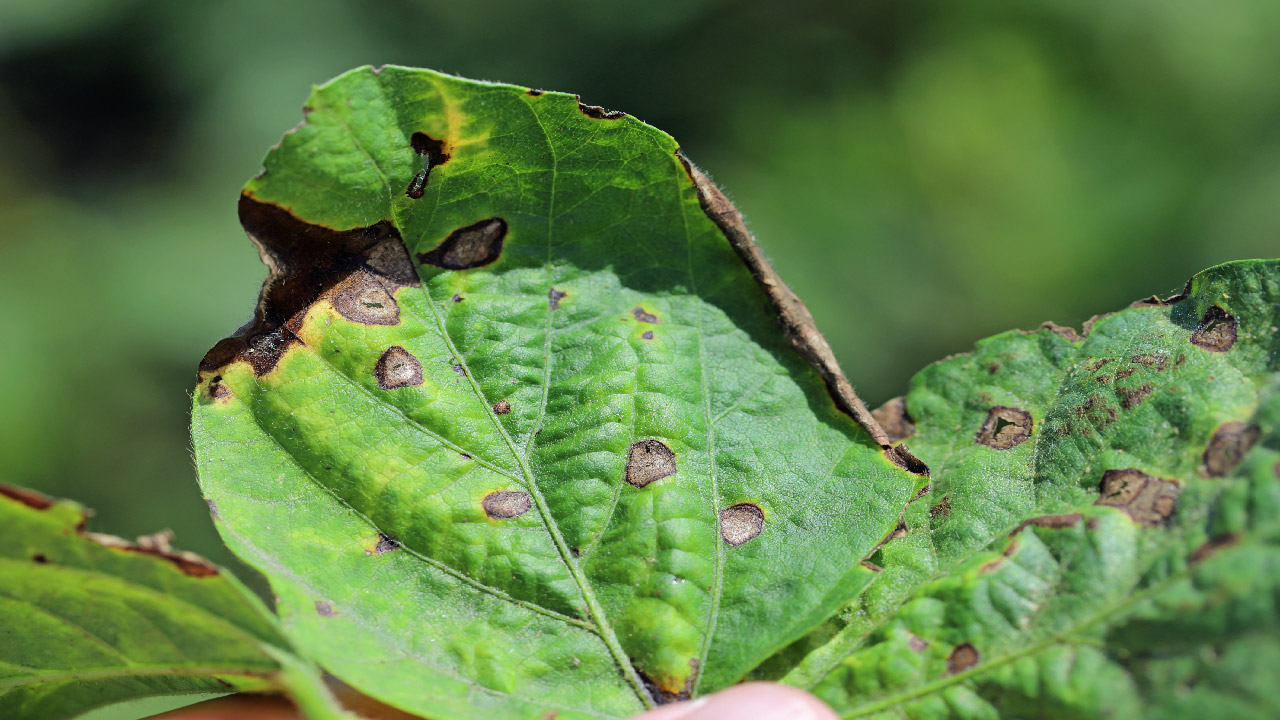
Fungal leaf spots show up as brown or dark patches, often ringed with a yellow halo, scattered across the foliage until badly affected leaves yellow and drop. They thrive when water splashes spores from the soil up onto the leaves. Remove infected leaves, mulch the soil surface to stop splash-back, water at the base, and improve airflow. One of the most common culprits in this group is cercospora, and if that is what you are dealing with, here is how to treat cercospora leaf spot organically, from the first spots through to full recovery. A copper or sulphur spray can back up your efforts on a stubborn case.
Black Spot on Roses
Black spot is the classic rose disease, marked by dark, fringed blotches on the leaves, followed by heavy leaf drop that can strip a bush by late summer. It overwinters on fallen leaves and infected stems, which is why sanitation matters so much. Clear and bin every fallen leaf, prune out affected canes, and never compost the debris. A baking soda or sulphur spray helps protect new growth, and good airflow through the middle of the plant makes a real difference. If black spot defeats you every year, it is worth replacing the worst offenders with modern resistant rose varieties bred to shrug it off.
Rust
Rust announces itself with small orange, yellow, or brown pustules, usually on the undersides of leaves, on everything from roses and hollyhocks to beans and alliums. It spreads on wind and water, so the response is familiar: remove and destroy affected leaves the moment you see them, avoid wetting the foliage, and open the plant up for better airflow. A sulphur-based spray can hold it back, and as with most of these diseases, resistant varieties and generous spacing prevent far more than any treatment cures.
Blight
Blight is the one to take seriously, particularly on tomatoes and potatoes, where it can turn healthy plants to blackened collapse within days in warm, wet spells. There is no gentle cure once it takes hold. Remove and destroy infected plants completely, never compost them, and protect the remaining plants with a copper treatment if the weather stays against you. Prevention is everything here: rotate where you grow these crops each year, space them generously, water at the base, and choose blight-resistant varieties, which have come a long way in recent seasons.
Knowing When to Let a Plant Go
Organic gardening is not about saving every leaf. Sometimes, the kindest and wisest move is to remove a badly diseased plant before it infects everything around it. Pulling one struggling tomato can protect the whole bed. Treating organically means working with your garden rather than against it, and accepting the occasional loss as the price of a living, balanced system that mostly looks after itself.
Handle disease this way, and you rarely find yourself in crisis. You spot problems early, respond gently, and let a healthy garden do most of the defending. I keep a growing library of organic plant care and troubleshooting guides at The Leaf Journal if you would like to dig deeper.